The Guilt That Travels Home With You: How Japanese Cinema Makes Viewers Complicit
Hollywood has always understood that audiences want to leave the theater feeling something — moved, thrilled, inspired, perhaps mildly unsettled in ways that resolve themselves on the drive home. The emotional architecture of American mainstream cinema is, at its core, designed for catharsis: tension builds, crisis arrives, resolution follows, and the viewer is released. Whatever moral weight the film carried has been discharged by the final scene. We exit clean.
Japanese cinema frequently declines to offer this service. More than that — it seems, at times, deliberately designed to prevent it.
There is a quality unique to watching films like Kiyoshi Kurosawa's Cure, Hirokazu Kore-eda's Nobody Knows, or Ryûsuke Hamaguchi's Evil Does Not Exist that is difficult to name precisely but impossible to ignore: the sense that you, the viewer, have been made somehow responsible. Not for the events on screen — you watched, you did not act — but for the fact of having watched. For having understood. For having, perhaps, recognized something in what you witnessed that implicates you more broadly in the conditions that made it possible.
This is not a comfortable experience. It is, however, an important one.
The Architecture of Non-Resolution
American ethical cinema — the prestige drama that takes on difficult subject matter — typically structures its moral questions as problems to be solved, or at minimum as positions to be declared. By the film's end, we know where the filmmaker stands. We know who was right. We have been guided, often quite deliberately, toward the correct emotional response.
Japanese cinema operates on a different principle. Its moral questions are not posed in order to be answered — they are posed in order to be inhabited. The camera's characteristic neutrality, which this publication has addressed in other contexts, extends to the ethical dimension of the stories being told. The filmmaker does not tell us how to feel about what we are seeing. The filmmaker shows us, and waits.
This waiting is not passivity. It is a form of pressure. When a Japanese film refuses to adjudicate its own moral content, the burden of judgment shifts — to the character, yes, but also to the viewer. We become the court of final appeal. And unlike the characters, we cannot plead ignorance. We have seen everything.
Complicity Through Comprehension
There is a particular mechanism by which Japanese cinema generates viewer complicity that deserves careful attention. It operates through comprehension — specifically, through the film's insistence on making us understand the perspective of characters who do things we would prefer to judge simply.
In Nobody Knows, Kore-eda's devastating account of four children abandoned in a Tokyo apartment, the camera refuses to grant the mother the status of villain. We understand her. We see the circumstances that produced her choices. We may even, uncomfortably, recognize in her the logic of self-preservation that any of us might apply under sufficient pressure. This understanding does not excuse her. But it prevents us from condemning her cleanly — and that prevention is itself a moral act on the filmmaker's part.
For American viewers, this can be genuinely disorienting. Our cultural narrative around moral failure tends toward accountability and resolution: wrongdoers are identified, consequences are assigned, and the story closes. When a film refuses this structure, when it insists instead on presenting failure as comprehensible and condemnation as insufficient, we are left holding a weight that has no designated shelf to rest on.
We carry it home.
The Audience as Bystander
There is another dimension of this complicity worth naming directly: the bystander position that cinema inherently assigns to its viewers, and the particular discomfort Japanese filmmakers derive from that position.
In Cure, Kurosawa constructs a horror that is social as much as it is personal — a horror that spreads through the ordinary cracks in ordinary people. The viewer watches this spread with full knowledge of what is happening, unable to intervene, aware that the inability to intervene is not simply a condition of the medium but a kind of indictment. We are bystanders. We know what bystanders allow.
This is a specifically Japanese cinematic preoccupation that connects to broader cultural and historical contexts — a cinema made by a society that has grappled seriously with questions of collective responsibility, of what it means to know and not act, of how ordinary people become complicit in extraordinary harm. American cinema has engaged with these questions too, but typically through the lens of individual heroism: someone acts, and the crisis is averted. Japanese cinema is more likely to examine what happens when no one acts, and to ask the viewer to sit inside that examination without the comfort of a hero.
Why This Matters for American Audiences
The discomfort that Japanese cinema produces in American viewers is not, I would argue, a barrier to engagement — it is the point of engagement. We live in a cultural moment saturated with content designed to affirm, to comfort, to provide exactly the emotional experience we have already decided we want. Japanese cinema offers something different: an experience that does not know in advance what you will feel, and does not particularly care whether you find it pleasant.
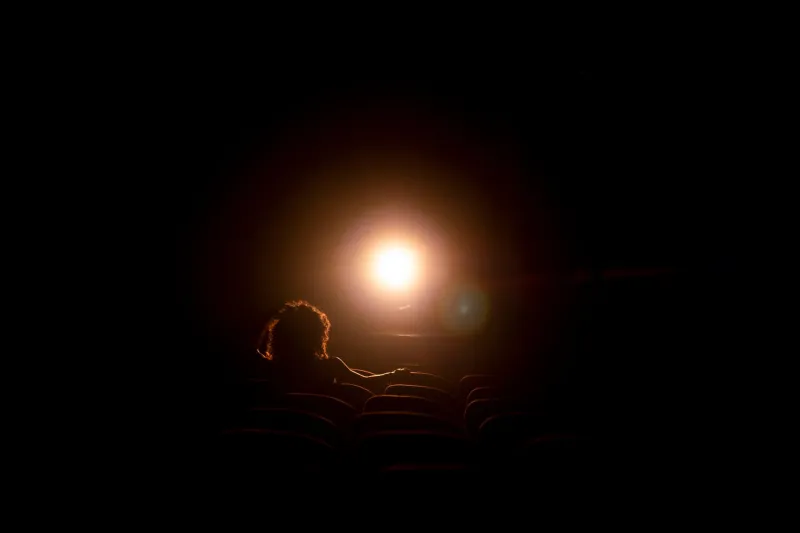
This is not cruelty. It is respect — for the complexity of moral life, for the intelligence of the viewer, and for the capacity of cinema to do something more than entertain. When a Japanese film leaves you unsettled, when the credits roll and you find yourself sitting in the dark with something unresolved lodged somewhere between your chest and your conscience, that is not the film having failed. That is the film having succeeded at something more demanding than catharsis.
The guilt that travels home with you is not punishment. It is an invitation — to think more carefully, to feel more honestly, and to recognize that the distance between the screen and your own life may be considerably smaller than the theater's darkness suggests.
Japanese cinema trusts you to do something with that recognition. The question is whether you are willing to accept the charge.