The Politics of the Quiet Gesture: Why Japanese Cinema's Gentlest Scenes Carry Its Heaviest Meaning
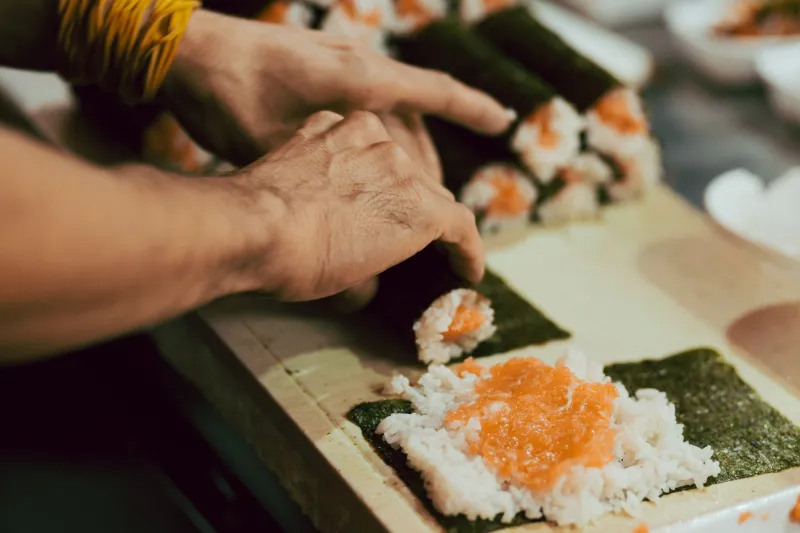
Consider the scene in which nothing, apparently, happens. Two people sit together. One of them prepares food. The other watches, or does not watch. There is minimal dialogue. The camera holds. An American viewer, accustomed to a cinema that signals importance through escalation — raised voices, decisive action, musical emphasis — might note the scene and wait for the story to resume.
The story has not paused. It is speaking at its most concentrated.
Japanese cinema has developed, across decades and across directors of vastly different temperaments, a consistent and sophisticated practice of embedding its most radical claims within its quietest moments. The act of care — the prepared meal, the washed hair, the body that simply remains present beside another body in distress — functions not as interlude but as argument. To miss this is to miss a significant portion of what Japanese film is actually saying.
Gentleness as Philosophical Position
The Western critical tradition has a persistent tendency to equate significance with confrontation. Ideas are argued. Conflicts are staged. Characters change because something happens to them — something visible, dramatic, unambiguous. This is not a universal grammar of storytelling. It is a culturally specific one.
Japanese cinema, drawing on aesthetic traditions that extend well beyond the film medium, operates from a different premise: that the most durable truths are not announced but accumulated, not argued but demonstrated through the texture of daily practice. The philosophical content of a scene is not located in what characters say to each other. It is located in what they do when saying seems insufficient or impossible.
Naomi Kawase's work is among the most sustained explorations of this principle in contemporary Japanese cinema. In Still the Water (2014) and Sweet Bean (2015), the preparation and consumption of food carries an ethical weight that no amount of dialogue could adequately convey. In Sweet Bean, the elderly Tokue's relationship to the red bean paste she makes — the patience she brings to it, the attention she directs toward the beans themselves as living things worthy of respect — constitutes a complete philosophy of presence, dignity, and reciprocity. It is also, quietly, a critique of a society that has discarded her. The gentleness of the gesture is the argument.
Care as Resistance
There is a political dimension to this practice that American audiences may be particularly positioned to overlook. In a cinema culture that tends to associate resistance with confrontation — the speech, the stand-off, the moment of public refusal — the idea that an act of quiet care might constitute a form of political assertion can feel counterintuitive.
But consider what acts of care assert, in contexts where care has been systematically devalued or denied. In Hirokazu Kore-eda's Like Father, Like Son (2013), the scenes in which one father engages in the daily physical rituals of childcare — bathing his son, playing on the floor, being present without agenda — carry an argument about what constitutes a genuine relationship that the film's more explicit dramatic confrontations never quite match. The gentleness is not decorative. It is evidentiary. It demonstrates something that cannot be argued into existence.
In Nobody Knows (2004), also by Kore-eda, the eldest child's care for his younger siblings — cooking for them, managing their small household, attending to their physical needs with a competence that should never have been required of him — is simultaneously heartbreaking and quietly heroic. The film does not editorialize about child abandonment or systemic failure. It shows, with sustained and unblinking attention, what care looks like when it is performed by someone who should be receiving it rather than providing it. The softness of the depiction makes the indictment more severe, not less.
What Vulnerability Reveals
One of the more distinctive features of Japanese cinema's use of quiet gesture is its willingness to present vulnerability not as weakness to be overcome but as a form of truth-telling. When characters in these films allow themselves to be seen in states of need — when they accept care rather than refusing it, when they weep without shame or simply sit with their inadequacy — the moment typically carries significant moral weight.
This is in direct tension with a dominant American cinematic value: the self-sufficient individual who manages their emotional life privately and presents a composed exterior to the world. Japanese cinema does not always celebrate composure. It is often more interested in what composure conceals and what its temporary dissolution reveals.
In Ryusuke Hamaguchi's Wheel of Fortune and Fantasy (2021), a film structured around chance encounters and unexpected emotional exposure, the scenes of greatest intimacy are also the scenes of greatest intellectual content. A conversation that drifts into unexpected honesty, a moment in which one character reads aloud to another and both are changed by the experience — these are not pauses in the film's argument. They are the argument, conducted through vulnerability rather than assertion.
The Risk of Mistranslation
The danger, for American viewers engaging with this tradition, is not incomprehension. Most viewers can recognize that a scene of hair-washing or shared silence is tender. The danger is misclassification — reading tenderness as mood rather than meaning, treating the quiet scene as atmospheric preparation for something more substantive rather than recognizing it as the substance itself.
This misreading is not a failure of intelligence. It is a consequence of training. American cinema has, for decades, taught audiences to locate narrative importance in escalation and confrontation, and to read quieter passages as relief or transition. Japanese cinema requires the unlearning of this habit — a willingness to slow one's interpretive attention and extend it toward the scene that appears to be resting.
Restraint Is Not Absence
What Japanese cinema ultimately proposes, in its most characteristic moments of gentleness, is that restraint is not the absence of something more forceful. It is a different kind of force — one that operates through accumulation, through presence, through the patient demonstration of what it means to attend carefully to another person or to the world.
The bowl of food prepared with attention. The hand that washes hair without being asked. The body that stays when staying is difficult. These are not small gestures in the cinema that has learned to film them well. They are the site of the film's deepest convictions — about what human beings owe each other, about what a society loses when it treats care as marginal, about what remains when everything performative has been stripped away.
To watch Japanese cinema at the level it deserves is to learn to receive these moments not as pauses but as propositions — quiet, insistent, and more radical than they first appear.