When Things Remember: How Japanese Cinema Transforms Objects and Rooms Into Vessels of Grief
American cinema has always trusted the face. From the heaving shoulders of a Hollywood melodrama to the raw, unguarded close-ups that define prestige drama, the dominant tradition in US filmmaking places emotional truth squarely in the body of the performer. Grief, in this tradition, is something witnessed—loud, visible, and immediate. Japanese cinema, by contrast, has long pursued a quieter and, in many ways, more unsettling proposition: that sorrow does not live in people alone. It seeps into the objects they touched, the rooms they occupied, and the routines they left unfinished.
This is not a stylistic eccentricity. It is a deeply considered philosophy of loss, one that filmmakers like Hirokazu Koreeda and Yasujirō Ozu have refined across decades of work. Understanding how they do it—and why it lands with such force—requires a willingness to read the frame differently than most American viewers are trained to do.
The Room That Knows
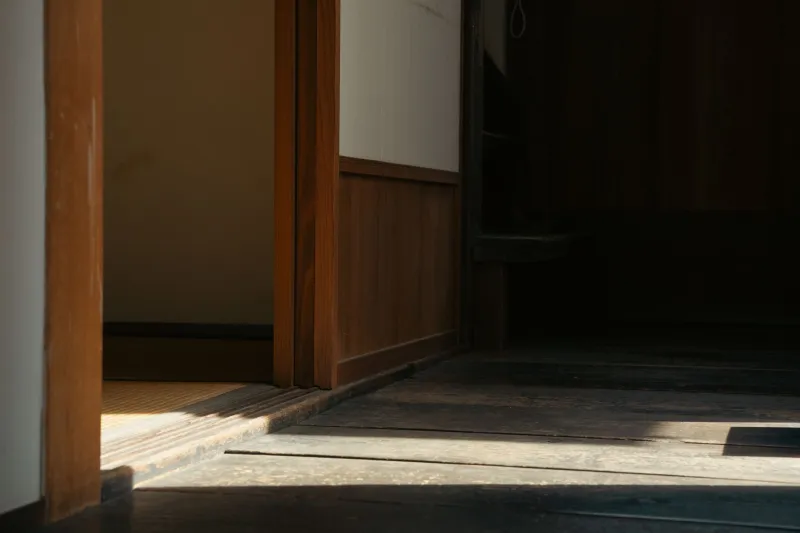
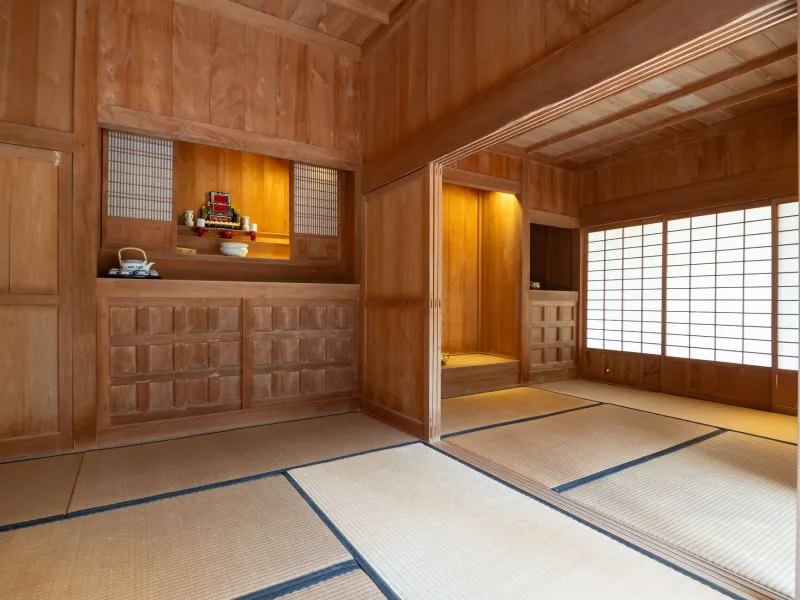
Ozu's late masterworks, particularly Tokyo Story (1953) and Late Spring (1949), are populated by interiors that seem almost to breathe with accumulated memory. A tatami mat worn smooth at its edges. A lacquered tray set for two, then quietly reset for one. These are not decorative choices. Ozu's production design functions as a kind of emotional archaeology, layering the domestic environment with the sediment of lives lived and relationships now strained or severed.
What distinguishes this approach is its restraint. When Noriko, in Late Spring, sits beside her sleeping father and allows a faint, ambiguous smile to cross her face, the scene's devastation is not contained in her expression alone—it radiates outward into the stillness of the room, the low angle of the camera, the quality of the evening light falling across familiar objects. The room does not merely surround the emotion. It participates in it.
For American viewers accustomed to being guided toward feeling by swelling scores and expressive performances, this can initially feel opaque. But the disorientation is precisely the point. Ozu is asking his audience to do something more active: to look at the world of the film the way one might look at the belongings of someone recently lost—searching for presence in absence.
Koreeda and the Grammar of What Remains
Hirokazu Koreeda has carried this tradition into the contemporary era with singular consistency. In Still Walking (2008), a family gathers annually to commemorate a son who drowned years before while saving a stranger's life. The film's grief is almost never spoken directly. Instead, it accumulates in the rhythms of food preparation, in the particular way a mother arranges flowers on an altar, in the specific placement of a pair of shoes at the entrance of a home.
Koreeda's genius lies in his understanding that domestic ritual is a form of grieving. The mother in Still Walking cooks obsessively, preparing her lost son's favorite dishes with a precision that has hardened, over the years, into something closer to ritual than pleasure. The kitchen becomes a shrine. The act of cooking becomes an argument with time—a refusal, through repetition, to fully accept that the person for whom the meal was made will never again sit down to eat it.
This is grief not as event but as environment. And it is an environment the film asks its audience to inhabit, rather than simply observe.
Why American Audiences Feel It Even When They Can't Name It
There is a reasonable question here: does this approach translate? American viewers do not share the specific cultural frameworks—the Buddhist relationship to impermanence, the Shinto sense that objects carry spiritual residue—that inform how Japanese filmmakers and audiences understand the relationship between the material world and emotional life.
And yet, the evidence suggests that translation is not required. Still Walking has been warmly received by American critics and festival audiences precisely because it accesses something that transcends cultural specificity: the universal human experience of entering a room that still smells like someone who is gone, of finding a coffee mug they left in the cabinet, of not being able to bring yourself to move a pair of glasses from the nightstand.
American viewers may not consciously recognize the cinematic tradition they are engaging with, but they recognize the feeling. The films work because they are, at their core, phenomenologically accurate. They describe what grief actually does to the world—the way it makes familiar spaces strange, the way it invests ordinary objects with unbearable significance.
The Object as Emotional Surrogate
In After Life (1998), Koreeda takes this logic to its most explicit conclusion. The film's premise—that the recently dead must choose a single memory to carry into eternity—is constructed entirely around the relationship between inner experience and its outward, physical anchors. Characters struggle to identify the moments that defined them, and in doing so, they inevitably return to objects, textures, and environments: the specific quality of light in a particular park, the feeling of a particular fabric, the sound of a specific room.
Koreeda is not being sentimental here. He is making a philosophical argument: that the self is not separable from the physical world in which it formed. To grieve a person is, necessarily, to grieve the world they inhabited—and that world persists, charged with their absence, long after they are gone.
This is also, implicitly, an argument about cinema itself. The camera records surfaces: light, texture, spatial relationships. What Japanese filmmakers of this tradition understand, and what makes their work so enduringly powerful, is that surfaces are never merely surfaces. They are the skin of inner life.
Reading the Frame Again
For American audiences approaching Japanese cinema for the first time—or returning to it with fresh attention—the invitation is to adjust the aperture of their attention. Rather than watching for what characters say and do, watch for what the frame holds around them. Notice the objects that recur. Notice what is placed in the foreground and what is allowed to blur into the background. Notice when the camera lingers on a room after a character has left it.
These are not incidental details. In the cinema of Ozu and Koreeda, they are where the film's emotional argument lives. The sorrow is not performed for the camera. It is deposited in the world—in the things people touched, the spaces they moved through, and the arrangements they made without knowing they were making them for the last time.
That is a harder kind of grief to watch than the kind that announces itself with tears. It is also, for many viewers, a truer one.