What the Empty Frame Holds: Negative Space as Emotional Architecture in Japanese Film
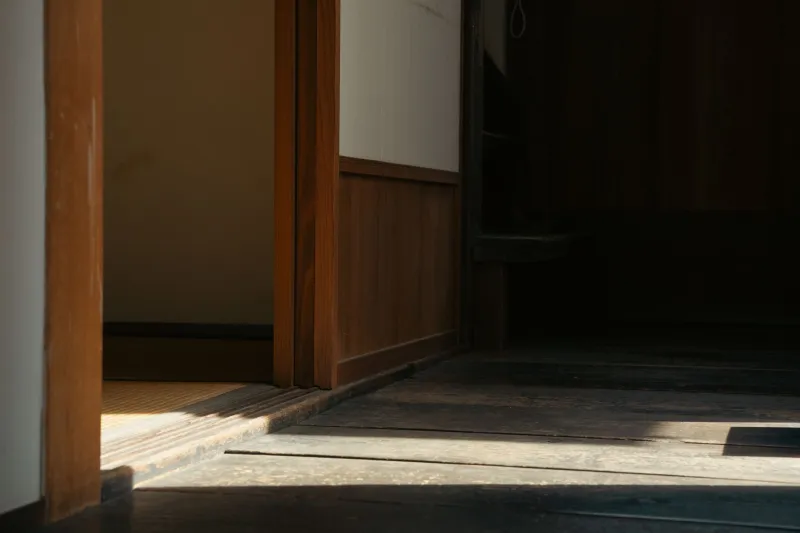
There is a moment near the end of Hirokazu Koreeda's Still Walking (2008) when the camera lingers on a hallway long after the characters have left it. No one speaks. Nothing moves. The shot offers no narrative information in the conventional sense—no plot advancement, no expository dialogue, no close-up of a trembling lip. And yet it is among the most emotionally devastating images in the film. For viewers accustomed to Hollywood's instinct toward visual saturation, this moment can feel disorienting. For those willing to meet it on its own terms, it feels like breathing.
This is the art of negative space in Japanese cinema: the deliberate, disciplined use of absence as a storytelling instrument.
The Philosophy Behind the Void
Negative space is not, of course, unique to Japanese film. Painters have employed it for centuries, and the concept has deep roots in Japanese aesthetic philosophy—most notably in the principle of ma (間), which refers to a meaningful pause or interval in time and space. In traditional Japanese arts, from ikebana flower arrangement to Noh theater, ma is not the absence of something; it is a presence in its own right. It is the breath between notes that gives music its shape.
Japanese filmmakers have inherited this sensibility and translated it into a cinematic grammar that operates on entirely different assumptions than the one dominant in American studio filmmaking. Where Hollywood tends to equate fullness with meaning—filling the frame, filling the silence, filling every narrative beat—Japanese directors frequently invert this logic. They treat the frame as a space of potential rather than a container to be packed.
Yasujirō Ozu, the foundational figure in this tradition, built an entire career on compositional restraint. His famous "pillow shots"—static images of teapots, corridors, laundry lines, empty rooms—interrupt the narrative flow not to provide context but to create a kind of emotional punctuation. They slow the viewer down. They insist on attention. Ozu understood that grief, joy, and longing are not best conveyed by depicting them directly but by creating the conditions in which an audience can feel them independently.
What the Camera Chooses Not to Show
Negative space in Japanese cinema operates on multiple levels simultaneously. There is compositional negative space—the deliberate placement of figures against large expanses of wall, sky, or floor, which isolates characters within their own emotional worlds. There is narrative negative space—the action that occurs off-screen, the conversation that is never shown, the confrontation that is only implied. And there is temporal negative space—the pause that extends just past comfort, the cut that arrives a beat too late, refusing to offer the audience the emotional release it has been conditioned to expect.
Koreeda is perhaps the contemporary master of all three registers. In Shoplifters (2018), the film's central moral revelation is withheld until the final act, but its emotional weight has been accumulating in the margins throughout—in the way a character averts her eyes, in the particular silence that follows a question left unanswered. When the truth finally surfaces, it does not feel like a plot twist. It feels like something the audience already knew, somewhere beneath conscious thought.
This is the counterintuitive power of absence: it activates the viewer's imagination in ways that explicit depiction cannot. When Ozu cuts away before a character's tears fall, or when Koreeda frames a family dinner so that the most important figure sits at the edge of the shot, partially obscured, the audience is drawn into a collaborative act of meaning-making. The emotion is not delivered; it is discovered.
The American Eye and Its Discomforts
For many American viewers, this approach initially registers as a lack rather than a choice. Pacing that feels deliberate to a viewer schooled in Ozu can feel slow or withholding to someone whose cinematic baseline is set by the rhythms of contemporary Hollywood. There is a real cultural gap here, and it is worth naming honestly.
American cinema has, for most of its history, operated on a principle of maximum legibility. Emotion should be visible, preferably audible, and ideally accompanied by a score that tells you how to feel about it. This is not a failure of artistry—it is a coherent aesthetic philosophy, one that has produced extraordinary work. But it does create a kind of visual dependency. Audiences trained on fullness may find themselves reaching for meaning in Japanese films and grasping at air, unsure whether they are missing something or whether the air itself is the point.
The answer, more often than not, is the latter.
Learning to Read the Space
Developing fluency in this cinematic language requires a shift in viewing posture—a willingness to sit with uncertainty, to resist the impulse to fast-forward through what feels like stasis. It also requires a recalibration of where meaning is expected to reside. In Japanese films that employ negative space most effectively, meaning does not announce itself. It accumulates quietly in peripheral details: the position of an object on a table, the direction of a character's gaze, the particular quality of afternoon light in a room where something irreversible has just occurred.
This is, in a sense, a more demanding form of cinema. It asks more of its audience. But it also offers something in return that visual and narrative saturation cannot: the experience of discovering emotion rather than receiving it. When a viewer arrives at feeling through their own act of interpretation, that feeling tends to be more durable, more personal, more theirs.
Ozu's late masterwork Tokyo Story (1953) remains one of the most quietly shattering films ever made, not because it depicts suffering with intensity but because it withholds that intensity almost entirely. The loss at the film's center is registered in a single, nearly motionless shot of an elderly man sitting alone. No swelling strings. No close-up of grief. Just a man, a window, and the space between them—which turns out to be infinite.
The Frame as Invitation
What Japanese cinema's tradition of negative space ultimately offers American audiences is an alternative model of what cinema can ask of its viewers. Rather than an experience of passive reception, it proposes an active, even intimate collaboration between filmmaker and audience—one in which the empty spaces are not gaps to be filled by more content but invitations to bring one's own interiority to the screen.
For a viewing culture that has grown accustomed to being told what to feel and when to feel it, this can be genuinely revelatory. The empty hallway in Still Walking holds whatever grief the viewer brings to it. That is not a limitation. That is the whole point.