When Silence Speaks Louder: The Emotional Architecture of Japanese Cinema's Quiet Moments
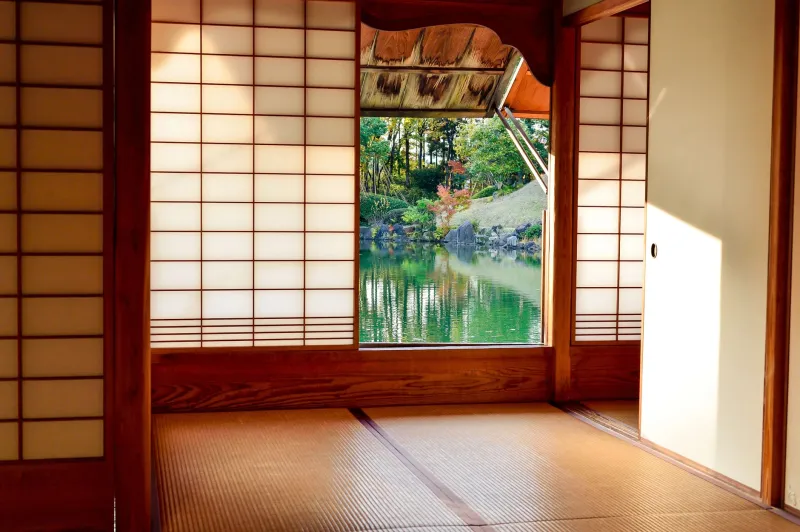
There is a moment in Hirokazu Kore-eda's Still Walking (2008) where a family sits together after a meal, the conversation having drifted into nothing in particular. No score swells beneath the scene. No character delivers a revelatory line. The camera simply holds. For American viewers raised on the rhythmic momentum of Hollywood storytelling—where silence typically signals danger or dramatic revelation—this kind of stillness can feel disorienting, even frustrating. Yet within that stillness lives the entire emotional truth of the film.
This is not accidental. It is, in fact, one of the most deliberate and sophisticated tools in the Japanese cinematic tradition.
The Aesthetic Roots of Cinematic Silence
To understand why Japanese directors reach so naturally for quiet, one must consider the cultural philosophy that shapes their creative instincts. The Japanese concept of ma (間)—often translated as "negative space" or "pause"—is a principle that permeates architecture, music, visual art, and everyday communication in Japan. Ma is not emptiness. It is the meaningful interval between things, the space that allows what surrounds it to breathe and resonate.
In cinema, ma translates into those extended moments where a director trusts the audience to feel rather than be told. Yasujirō Ozu, the mid-twentieth-century master whose influence on world cinema remains immeasurable, built his entire filmography around this principle. His famous "pillow shots"—cutaways to teapots, laundry lines, hallways, and landscapes that seem to interrupt the narrative—are not interruptions at all. They are emotional punctuation marks, allowing the weight of a previous scene to settle into the viewer before the story moves forward.
American audiences encountering Ozu for the first time through films like Tokyo Story (1953) or Late Spring (1949) often describe a curious experience: they feel moved without being entirely certain why. The answer is that Ozu's silences do not withhold emotion—they concentrate it.
Kore-eda and the Grammar of the Everyday
If Ozu established the vocabulary, contemporary director Hirokazu Kore-eda has expanded it into a full literary language. His films—After Life (1998), Nobody Knows (2004), Shoplifters (2018)—are constructed around the rhythms of domestic life, and his use of silence reflects a deep commitment to authenticity over artifice.
In Shoplifters, which won the Palme d'Or at Cannes and introduced many American viewers to Kore-eda's work, the emotional climax is not a shouting match or a dramatic confession. It is a quiet scene between an elderly woman and a child, both sitting near a window, barely speaking. What passes between them—communicated through small gestures, averted eyes, and the sound of wind—carries the weight of the entire film's themes about family, belonging, and love that exists outside legal or biological definition.
For viewers accustomed to screenwriting structures that demand explicit emotional declaration, this approach can register as restraint. It is, in reality, the opposite: an absolute confidence that human beings communicate volumes in the spaces between their words.
Why American Audiences Struggle—and Then Surrender
Hollywood's dominant storytelling model has been shaped by decades of market research, test screenings, and a commercial imperative to keep audiences engaged at all times. Dialogue carries exposition. Music signals emotion. Editing maintains pace. Silence, in this framework, is a problem to be solved rather than a resource to be deployed.
This creates a genuine cultural gap when American viewers encounter Japanese cinema for the first time. The instinct is to reach for a phone, to wonder if the streaming service has buffered, to assume that something has gone wrong technically. The film seems to be waiting for something to happen.
But experienced viewers of Japanese cinema describe a different phenomenon: a kind of surrender. Once the expectation of constant stimulation is released, the quiet moments begin to work on the viewer in ways that dialogue never could. The silence becomes participatory. The audience is invited to bring their own memories, their own losses, their own unspoken family dynamics into the frame.
This is, perhaps, the most sophisticated form of cinematic empathy. Rather than directing the audience toward a prescribed emotional response, these films create conditions in which genuine feeling can arise organically.
The Sound Design Beneath the Silence
It would be a mischaracterization to describe Japanese cinema's quiet moments as truly silent. Precision is required here. What these directors achieve is the elimination of narrative sound—score, dialogue, sound effects designed to propel story—while retaining the ambient texture of the world.
Kore-eda's sound design, in particular, is extraordinarily detailed in its quietest sequences. Cicadas. A distant train. The specific creak of a wooden floor. These sounds do not comment on the action; they locate it. They remind the viewer that the characters exist in a real, physical world, which paradoxically makes their emotional experiences feel more universal rather than less.
Ozu's contemporary, Kenji Mizoguchi, employed a similar philosophy in films like Ugetsu (1953), where the horror and grief of his narratives were amplified by the natural sounds of water and wind rather than conventional horror scoring. The result is a kind of dread and sorrow that lingers far beyond the theater.
A Reshaping Influence on Global Cinema
The influence of Japanese minimalism on contemporary world cinema is substantial and growing. Directors as varied as Wim Wenders, Jim Jarmusch, and Kelly Reichardt have cited Japanese cinema as a formative influence on their approach to pacing and silence. The slow cinema movement—represented by filmmakers like Chantal Akerman and Béla Tarr—shares a philosophical kinship with the Japanese tradition, even when emerging from entirely different cultural contexts.
More recently, the commercial and critical success of Kore-eda's work in the United States—Shoplifters received an Academy Award nomination for Best Foreign Language Film and earned significant theatrical distribution—suggests that American audiences are not, in fact, resistant to this kind of storytelling. They are simply unaccustomed to it.
The heart of Japanese cinema, as this publication's name suggests, is not exotic or inaccessible. It is deeply human. The silence is not a barrier. It is an invitation.