Lost in Translation: What Makes a Manga Adaptation Succeed—and Why So Many Fall Apart
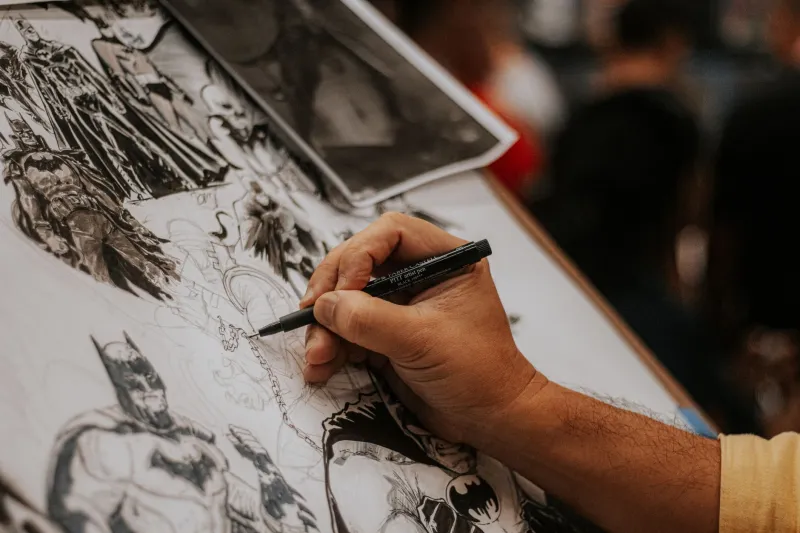
The manga panel is a peculiar thing. It is static, yet it implies motion. It is silent, yet it carries rhythm. It presents a single frozen image, yet a skilled reader experiences it as a sequence of events unfolding in real time. This is the foundational paradox that every filmmaker—whether working in live-action or animation—must confront when adapting manga for the screen. And it is a paradox that reveals itself most clearly when an adaptation fails.
For American audiences encountering Japanese film adaptations of beloved manga properties, the results can range from revelatory to baffling. Understanding why requires a closer examination of what manga actually is as a visual medium, and what cinema is in return.
The Visual Grammar of the Manga Page
Manga is not simply illustrated fiction. It is a distinct visual language with its own grammar, syntax, and rhetorical devices. Panel size communicates pacing: a large panel slows time, demanding contemplative attention, while a rapid sequence of small panels accelerates it. Gutters—the white spaces between panels—are where the reader's imagination performs the connective work, inferring motion and causality from juxtaposed still images.
Manga artists also employ a range of perspective techniques that have no direct equivalent in conventional photography. Extreme foreshortening, impossible camera angles, and the deliberate distortion of character proportions to convey emotional states are all standard tools of the form. When a character is overcome with embarrassment, their face may occupy an entire page in exaggerated close-up, rendered in a simplified, almost cartoonish style that exists simultaneously with the more realistic aesthetic of surrounding panels.
This visual code is deeply familiar to Japanese readers who have grown up with manga as a primary entertainment medium. It is considerably less intuitive to American audiences encountering it for the first time, which creates both a challenge and an opportunity for filmmakers working with this material.
Animation as the Natural Heir
It is not coincidental that Japan's most celebrated manga adaptations have historically been animated. The medium of animation—particularly as developed by studios like Studio Ghibli and Toei Animation—shares fundamental properties with manga that live-action cinema simply does not.
Consider Hayao Miyazaki's relationship to manga. Though his films are original works rather than direct adaptations, his visual sensibility is inseparable from manga aesthetics: the expressive character designs, the impossible architectural spaces, the way emotional states are externalized through visual metaphor rather than dialogue. Nausicaä of the Valley of the Wind (1984) originated as Miyazaki's own manga serialization, and the transition to film felt seamless precisely because both versions operated within the same visual logic.
More instructive is the case of Akira (1988), Katsuhiro Otomo's adaptation of his own landmark manga. The film compressed thousands of pages of source material into approximately two hours, necessarily sacrificing narrative complexity. Yet it succeeded because Otomo understood that the task was not transcription but translation. He identified the visual and emotional core of his work—the kinetic energy of Neo-Tokyo, the horror of unchecked power, the tragedy of adolescent alienation—and rebuilt those elements in cinematic terms. The result is a film that stands independently of its source material while remaining unmistakably faithful to its spirit.
Where Live-Action Adaptations Diverge
The history of live-action manga adaptation is considerably more complicated. For every Rurouni Kenshin (2012)—which succeeded by embracing the choreographic excess of its source material and casting with genuine attention to character—there are numerous productions that mistake fidelity to surface appearance for fidelity to meaning.
The central problem is that manga's most expressive visual devices are fundamentally non-photographic. The exaggerated proportions that make a character's grief or rage immediately legible on the page become uncanny when replicated in a human face. The impossible camera angles that manga artists use to create visual dynamism are physically unachievable without significant digital manipulation, which often introduces an artificial quality that undermines the emotional authenticity the adaptation requires.
Live-action adaptations that navigate this successfully tend to do so by accepting that a direct visual translation is neither possible nor desirable. Takashi Miike's JoJo's Bizarre Adventure: Diamond Is Unbreakable Chapter I (2017) understood that the theatrical extravagance of Hirohiko Araki's visual style demanded an equally theatrical approach to production design and performance. The film did not attempt naturalism. It attempted coherent artifice, which is a very different and considerably more honest goal.
What Hollywood Consistently Misunderstands
The history of Hollywood's attempts to adapt Japanese manga and anime properties for Western audiences offers a useful, if dispiriting, case study in the consequences of misunderstanding visual narrative. The 2017 live-action adaptation of Ghost in the Shell—Masamune Shirow's philosophically dense manga about identity and consciousness in a cyberpunk future—is perhaps the most widely discussed example.
The film's failures were multiple and well-documented, but the most fundamental was its treatment of visual storytelling as decoration rather than substance. Mamoru Oshii's 1995 animated adaptation succeeded because it understood that Shirow's manga was not primarily a story about events. It was a meditation on perception, rendered through images that destabilized the viewer's sense of what was real and what was constructed. The animated film's extended, nearly wordless sequences—the Major floating through the city, the underwater dive, the final confrontation—were not stylistic flourishes. They were the argument.
The Hollywood version replaced those meditative sequences with conventional action choreography and expository dialogue, effectively translating the images while discarding the meaning they carried.
The Lessons That Travel
What the most successful manga adaptations share, across both animation and live-action, is a willingness to interrogate the source material rather than simply reproduce it. The filmmakers who have achieved the most compelling results—Otomo, Oshii, Makoto Shinkai with Your Name (2016), and Isao Takahata with Grave of the Fireflies (1988)—understood that their task was to ask what the manga was trying to make the reader feel, and then to find the cinematic means to produce that feeling.
This is a fundamentally different creative philosophy from the one that tends to govern high-profile adaptation projects in Hollywood, where brand recognition and narrative fidelity to beloved story beats often take precedence over the deeper question of what the source material was actually doing.
For American audiences interested in understanding Japanese cinema more fully, manga adaptations offer a particularly rich entry point. They represent a conversation between two visual languages, and the quality of that conversation—its fluency, its failures, its unexpected moments of genuine translation—reveals the distinct logic of each medium with unusual clarity.