Time as Instrument: How Japanese Cinema Weaponizes Duration to Unsettle and Illuminate
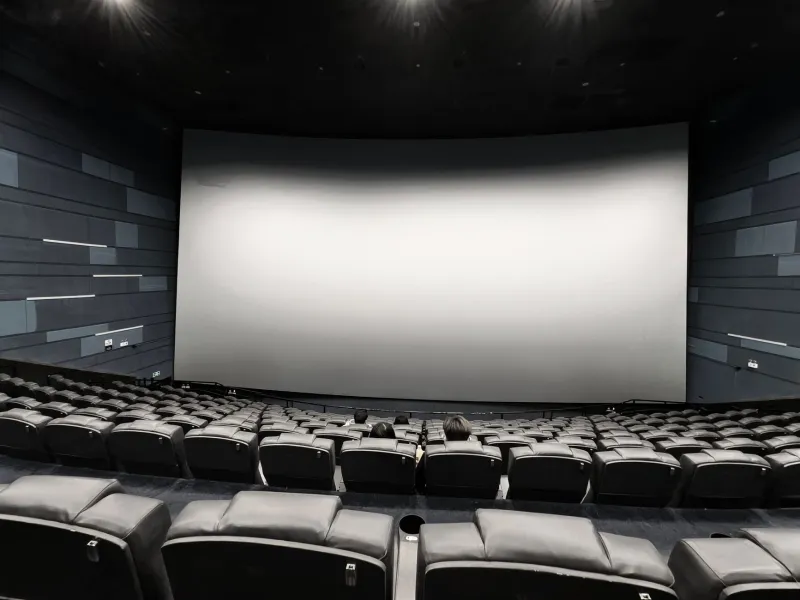
American cinema has always been, at its core, a cinema of momentum. Editors are trained to cut before the audience grows restless, to keep the rhythm propulsive, to trust that a viewer's attention is a finite and fragile resource. Japanese cinema operates under an almost opposite assumption: that attention, when held long enough, transforms into something richer and stranger than simple engagement. Duration, in the hands of Japan's most deliberate filmmakers, is not a neutral container for events. It is the event itself.
This distinction matters more than it might initially appear. When a Japanese director holds a shot for twice as long as a Hollywood counterpart would dare, the effect is not merely aesthetic. It is physiological. The viewer begins to feel time passing in their own body. Impatience surfaces, then something more interesting happens—the impatience curdles into awareness, and the awareness opens into a deeper form of attention.
The Long Take as Ethical Demand
Hirokazu Kore-eda has built an entire career on the premise that duration is a form of respect. In Still Walking (2008), the camera lingers on domestic gestures—a mother frying tempura, an old man watching television—long after a conventional editor would have moved on. These are not scenes that advance plot. They are scenes that accumulate weight. By the time the film's emotional confrontations arrive, the viewer has spent so many minutes inside the texture of this family's ordinary life that the stakes feel personal in a way that faster storytelling simply cannot manufacture.
This is not accidental. Kore-eda has spoken in interviews about his belief that cinema should work the way memory works—not in highlights and turning points, but in the slow sediment of repeated experience. American films tend to compress time toward drama. Japanese films of this tradition expand time toward truth.
The distinction carries an ethical dimension as well. When a director forces you to sit with a character through an extended, unbroken moment, you cannot maintain the comfortable distance of a passive observer. You become implicated. You are no longer watching someone suffer or endure—you are enduring alongside them, and that shared duration creates a form of moral proximity that editing would otherwise allow you to avoid.
Repetition as Psychological Architecture
If the long take is one instrument in this temporal toolkit, repetition is another—and arguably more unsettling one. Ryūsuke Hamaguchi's Wheel of Fortune and Fantasy (2021) deploys scenes of repeated dialogue and circular conversation not to advance story but to destabilize the viewer's sense of narrative progress. Characters revisit the same emotional territory, sometimes in nearly identical words, and the effect is less like watching a film and more like watching a person discover, in real time, how thoroughly they are trapped within their own patterns.
For American viewers accustomed to the clean arc of conflict and resolution, this repetition can initially register as a flaw—surely the editor missed a chance to tighten the scene? But the repetition is the point. Hamaguchi is not moving characters from A to B. He is showing you the walls of the room they cannot leave. Duration and recurrence become the architecture of psychological confinement, and the viewer, held in the same space, begins to feel the confinement in their own chest.
This technique has deep roots in Japanese theatrical tradition, particularly Noh drama, where slowness and cyclical structure are understood as vehicles for revealing what urgency conceals. Contemporary Japanese cinema inherits this sensibility, even when its directors may not consciously invoke it.
When Silence Becomes Pressure
Extended silence functions differently in Japanese cinema than it does in Western film, where silence tends to signal either intimacy or menace. In Japanese cinema, silence is often simply the natural duration of thought—a space that the camera holds without apology until the character has finished processing whatever they are processing. The viewer is not permitted to rush them.
Consider the quieter passages in Naomi Kawase's work, or the long pauses between exchanges in Kiyoshi Kurosawa's horror films. In Kurosawa's Pulse (2001), the terror does not arrive through jump cuts or musical stings. It accumulates through duration—through the camera's patient willingness to remain in a room that feels wrong, watching characters who move with the deliberateness of people who have already accepted something the audience has not yet understood. The dread is not triggered by event. It is grown through time.
This approach asks something unusual of American viewers in particular. A culture that valorizes speed, efficiency, and forward momentum finds extended cinematic silence counterintuitive, even mildly aggressive. The impulse to check a phone, to wonder whether something is about to happen, is itself the film working on you. Your restlessness is the text.
The Viewer as Subject
What makes this temporal strategy philosophically interesting is that it turns the viewer's own psychology into part of the film's subject matter. When Yasujirō Ozu holds a shot of an empty hallway for several seconds after a character has exited—a technique so consistent in his work that scholars have named it the "pillow shot"—the viewer is invited to ask what they are still doing here. What does this empty space mean? Why does it feel loaded? The question is not answered. It is extended.
This is cinema that trusts its audience to do cognitive and emotional labor, and that trust is itself a statement about what film can be. The American model, broadly speaking, manages the viewer's experience with considerable care—guiding attention, signaling emotion through score, ensuring that meaning is legible at the pace of its delivery. Japanese cinema of this mode declines to manage. It offers duration and waits to see what the viewer does with it.
What American Viewers Take Home
For US audiences encountering this tradition for the first time, the experience can be disorienting in a way that is worth sitting with. The disorientation is not a failure of the film to communicate. It is the film communicating something that faster cinema structurally cannot: that presence takes time, that understanding is not the same as comprehension, and that the willingness to remain in an uncomfortable moment—without resolution, without relief—is itself a form of engagement that transforms the person who practices it.
Japanese cinema's relationship with duration is, ultimately, a relationship with what it means to pay attention. In a media landscape that increasingly optimizes for the shortest possible unit of feeling, that is not a minor distinction. It is a different philosophy of what cinema is for.
The camera does not blink. In learning to match that steadiness, the viewer becomes, for the length of the film, a slightly different version of themselves.