Speaking in Gaps: How Japanese Cinema Turns Sparse Dialogue Into a Deeper Emotional Language
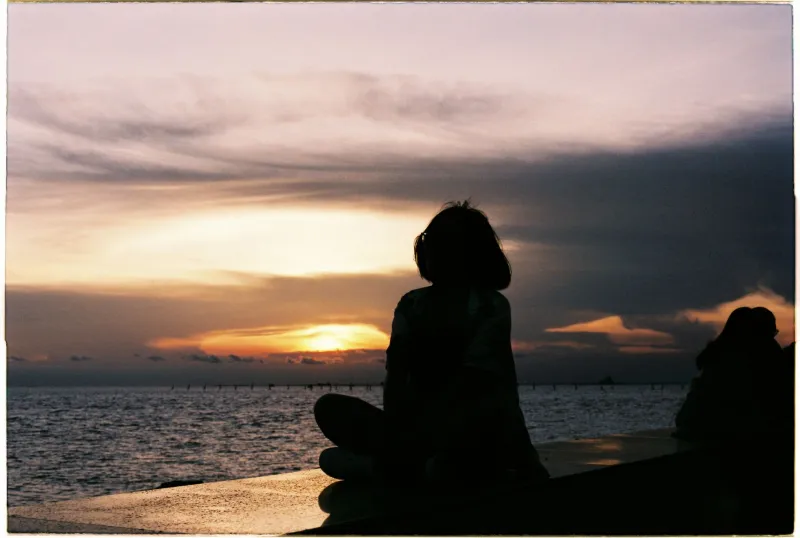
There is a particular moment in Yasujirō Ozu's Tokyo Story that American viewers sometimes describe as confusing on first watch. Two elderly parents, having traveled across the country to visit their adult children, sit quietly on a seawall at night. They say almost nothing. What little they do say concerns the weather, the hour, the faint lights of the city reflected on the water. And yet the scene is devastating — a portrait of loneliness, of love outlasting its usefulness, of time doing what time always does. No one explains any of this. No one needs to.
For audiences raised on Hollywood's narrative grammar — where feelings are named, backstories are delivered, and emotional turning points are announced by swelling scores and clarifying speeches — this restraint can feel, at first, like absence. Something is missing, the American viewer suspects. The film is not doing its job.
But Japanese cinema is doing an entirely different job. And once that distinction becomes clear, the silence stops feeling like withholding and starts feeling like trust.
The Hollywood Habit of Saying Everything
Hollywood's relationship with dialogue is, in many respects, a relationship with anxiety. The fear that audiences might not follow, might not feel, might disengage — this fear drives an enormous amount of verbal scaffolding. Characters explain their motivations. They articulate their grief. They tell one another things they already know so that the audience can be brought up to speed. Even films that pride themselves on subtlety tend to include at least one scene in which a character sits across from a therapist, a best friend, or a mirror and says, in plain terms, what the movie is about.
This is not without value. Clarity has its place. But it also carries a cost: when everything is spoken, very little is felt. The audience processes rather than experiences. The emotional labor is outsourced to the screenplay.
Japanese cinema, by contrast, treats dialogue as one instrument in a much larger ensemble — and often not the lead instrument at that.
What Silence Actually Does
In Hirokazu Kore-eda's Still Walking, a family gathers to mark the anniversary of a son's death. The film is built from the rhythms of a single day: meal preparation, small arguments, neighborhood walks. Characters circle what they mean without ever landing on it directly. A mother's resentment toward her surviving son surfaces not in confrontation but in the particular way she assigns him tasks, in the pause before she answers a question, in a story she tells about a butterfly that everyone in the room understands to be about something else entirely.
The restraint here is not a stylistic flourish. It is a faithful representation of how grief actually moves through a family — sideways, encoded, never quite spoken aloud. When Kore-eda does allow a character to say something direct, the directness lands with extraordinary force precisely because it has been so carefully withheld.
This is the mechanism at the heart of Japanese cinematic dialogue: economy creates pressure. The less that is said, the more weight each word carries when it finally arrives.
The Viewer as Active Participant
One of the more significant differences between Hollywood storytelling and Japanese cinematic tradition is the role assigned to the audience. Hollywood tends to position the viewer as a passenger — guided, informed, emotionally directed at each turn. Japanese cinema, particularly in the tradition running from Ozu through Mikio Naruse and forward to contemporary directors like Ryūsuke Hamaguchi, positions the viewer as a collaborator.
Hamaguchi's Drive My Car, which earned considerable American attention following its Academy Award win, offers a useful case study. The film's dialogue is dense but deliberate — long passages from Chekhov coexist with conversations between characters who are, themselves, learning to speak honestly. Yet the most important exchanges in the film are not the ones where characters say the most. They are the ones where characters fall silent in moving vehicles, staring through windshields at roads that seem to have no end. The audience is asked to fill those silences with inference, with attention, with their own accumulated sense of who these people are.
That is not a passive activity. It is, in fact, considerably more demanding than following a Hollywood screenplay's verbal map. And it produces a correspondingly more personal emotional experience — because what the viewer brings to those silences becomes part of what the film means.
Why American Audiences Resist, Then Surrender
The initial disorientation that many American viewers report when encountering Japanese cinema's dialogue rhythms is worth taking seriously rather than dismissing. It reflects a genuine difference in expectation, one shaped by decades of a particular storytelling culture. When a film does not confirm that it has been understood — when it refuses to summarize itself — the conditioned viewer reaches for impatience.
But something interesting tends to happen over the course of a film like Tokyo Story or Still Walking or Naomi Kawase's An. The viewer adjusts. The nervous system recalibrates. What felt like silence begins to feel like space — room in which to pay attention differently, to notice the way a character holds a teacup, the direction in which eyes move when a painful subject arises, the specific quality of a pause after a question is asked but before it is answered.
This recalibration is not accidental. It is what these films are designed to produce. Japanese cinema trains its audience in the course of watching it, gradually expanding the viewer's capacity to read emotional information from non-verbal sources.
The Eloquence of Omission
There is a concept in Japanese aesthetics — ma — that refers to the meaningful interval, the pause that gives surrounding elements their definition. It appears in music, in architecture, in the visual arts, and it is foundational to the temporal grammar of Japanese cinema. The gap between words is not empty. It is structured. It is doing work.
When Chishū Ryū and Chieko Higashiyama sit on that seawall in Tokyo Story and speak about almost nothing, the ma between their lines holds everything the film has built — every small disappointment, every unvoiced longing, every year that has passed between them. Hollywood would write that scene differently. It would give those characters words adequate to what they feel.
Japanese cinema understands that no words are adequate. And so it gives them silence instead — which turns out to be more than enough.
For American viewers willing to meet that silence with patience rather than frustration, what waits on the other side is a kind of emotional experience that dialogue, for all its efficiency, has never quite been able to deliver.