Staying in the Room: Japanese Cinema's Commitment to the Moment After
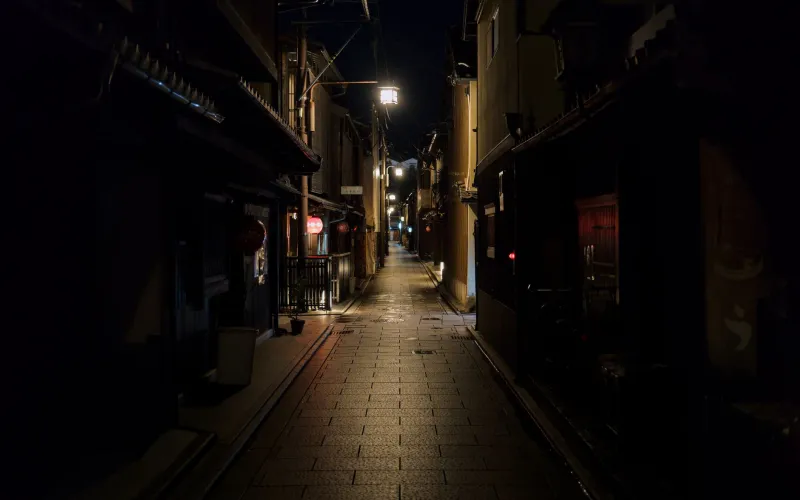
There is a specific discomfort that attentive viewers of Japanese cinema learn to recognize and, eventually, to value. It arrives in the seconds—sometimes the minutes—after a scene's apparent dramatic peak has passed. The argument has ended. The revelation has landed. The violence has concluded. And yet the camera does not move. The film does not cut. The director keeps the audience inside the room, inside the face, inside the aftermath.
This is not a stylistic quirk. It is a considered philosophical position about what film is capable of doing to an audience—and what audiences owe the stories they choose to watch.
The Western Exit and What It Costs
American narrative filmmaking is, at its structural core, a cinema of momentum. Scenes are designed to generate forward propulsion: information is delivered, conflict is escalated, decisions are made, and the cut arrives to carry the audience toward the next unit of story. This architecture is enormously effective at maintaining engagement. It is also, in a specific sense, a form of mercy—a permission granted to the viewer to process consequence only in the abstract, at a comfortable remove from its texture.
Consider how a mainstream American film handles violence. The act itself may be depicted at length, but the moment after—the stillness, the breathing, the adjustment of bodies and faces to a new reality—is almost always abbreviated. The camera cuts away before the room has fully registered what has happened. The audience is spared the silence.
Japanese cinema, across a remarkably wide range of directors and genres, refuses this mercy. It insists that the silence is, in fact, the scene.
The Architecture of Aftermath
What happens, technically, when a Japanese director elects to stay? The camera—often fixed, often at a distance that respects the privacy of the moment while refusing to abandon it—observes the recalibration of ordinary behavior in the wake of the extraordinary. Characters who have just wept begin the small mechanical acts of composure: smoothing clothing, looking away, refilling a cup. Characters who have just received devastating news do not immediately respond with legible emotion. They sit. They breathe. They exist in the gap between receiving information and knowing what it means.
This is psychologically accurate in a way that the conventional dramatic reaction shot is not. Human beings do not process upheaval on cue. They require the awkward, ungoverned moments that follow a scene's apparent conclusion—and Japanese cinema's willingness to represent those moments is one of the reasons its emotional impact tends to accumulate rather than peak and dissipate.
Directors such as Yasujiro Ozu, Masahiro Shinoda, and more recently Ryusuke Hamaguchi have made this formal patience a signature element of their work. In Hamaguchi's Drive My Car, for instance, conversations are allowed to settle into their own weight after the final exchange, and the camera's continued presence transforms what might have been a scene's punctuation mark into a full paragraph. The viewer is not told what to feel. The viewer is given time to feel it.
Consequence as Duration
There is a deeper argument embedded in this technique: that consequence is not an event but a duration. Western narrative convention treats consequence as something that can be efficiently communicated—a reaction shot, a musical swell, a line of dialogue that names the emotional stakes. Japanese cinema treats consequence as something that must be experienced in time, because only time reveals the full weight of what has occurred.
This is particularly evident in how Japanese films handle grief. Where an American film might signal bereavement through a conventionally rendered breakdown—tears, controlled but visible, scored to emphasize the audience's own emotional release—a Japanese film is more likely to show us the ordinary domestic act that follows the moment of loss. A character washes dishes. A character folds laundry. The camera observes these tasks with the same attention it would give to a confession, because in this tradition, the mundane act performed in the shadow of loss is the confession. The body's insistence on continuing is the most honest statement the character can make.
What the Audience Learns to Do
For American viewers encountering this formal discipline for the first time, the initial response is often impatience. The scene feels finished. The information has been conveyed. Why are we still here?
The answer, which reveals itself with repeated exposure to Japanese cinema, is that we are still here because being here is the point. The film is not withholding resolution; it is arguing that resolution is not the appropriate response to the kind of experience it is depicting. Some things do not resolve. They simply become part of the room's atmosphere, part of the light on a character's face, part of the texture of an ordinary life that has been permanently altered.
Learning to remain in these moments—rather than reaching past them toward the next plot development—is one of the most valuable disciplines that Japanese cinema can offer an audience trained on forward momentum. It is, in a quiet but serious way, a form of education in how to be present with difficulty. And that is not a small thing for cinema to accomplish.