Observed, Never Sentenced: How Japanese Cinema's Camera Refuses to Play Judge
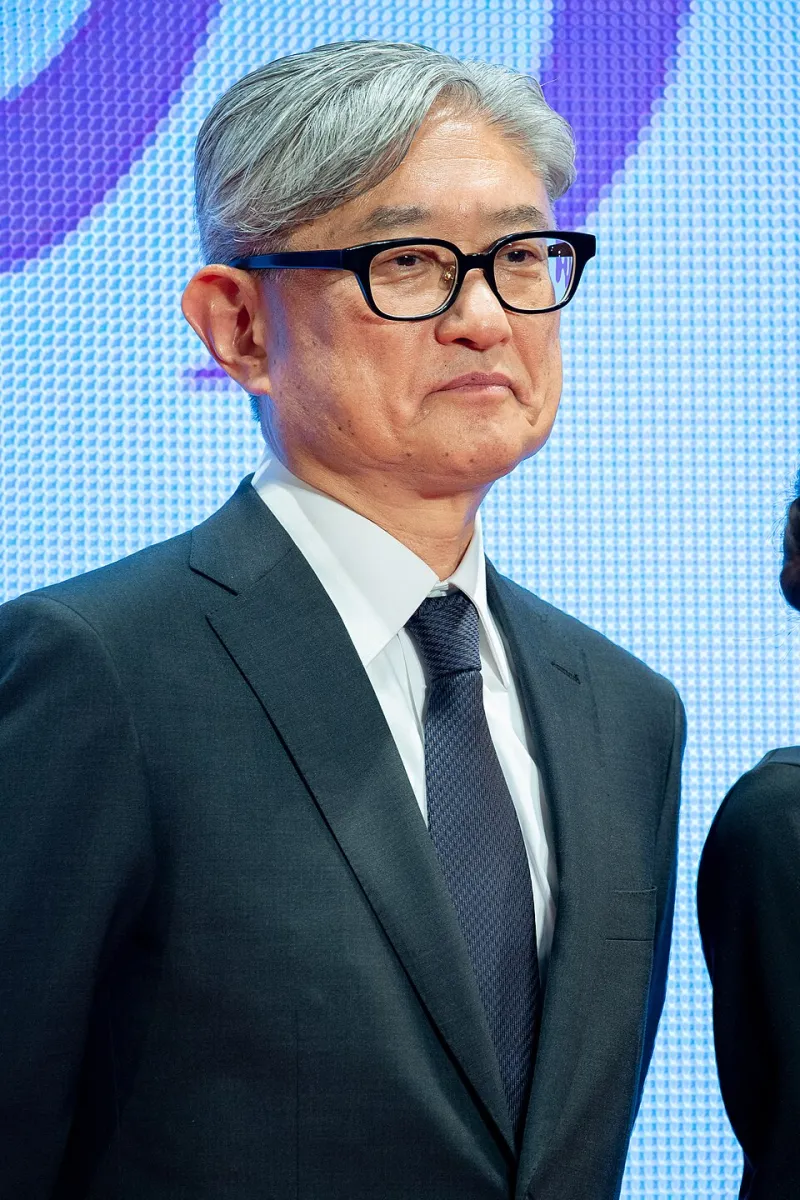
Photo: Dick Thomas Johnson from Tokyo, Japan, CC BY 2.0, via Wikimedia Commons
There is a particular comfort that American cinema extends to its viewers: the camera will tell you what to think. A villain's face is lit from below. A hero's moment of triumph is underscored by a swelling score and a low, empowering angle. The visual grammar of Hollywood storytelling has trained audiences over a century to expect moral direction embedded in every frame. Japanese cinema, by contrast, frequently withholds that direction entirely—and the effect can be disorienting in the most productive sense imaginable.
At Shinzou Cinema, we have written at length about how Japanese film encodes meaning in stillness, in gesture, in the space between spoken words. But the camera itself—its position, its movement, its relationship to the bodies it photographs—carries an equally radical philosophical commitment: the commitment to observe without adjudicating.
The Neutral Angle as Ethical Statement
In Hirokazu Kore-eda's Nobody Knows (2004), the camera spends a great deal of time at child height, positioned at the eye level of the story's young protagonists. This might seem like a straightforward technique for building empathy—and it does accomplish that—but Kore-eda consistently refuses to use angle as condemnation. When the absent mother reappears, she is not photographed from below to diminish her or from above to render her pathetic. The camera meets her at roughly the same level it meets her children. The film refuses to sentence her even as it documents her neglect.
This is not moral equivalence. Kore-eda is not suggesting that the mother's behavior is acceptable. He is doing something more demanding: he is asking the viewer to hold the complexity of a person who is simultaneously loving and catastrophically irresponsible, without the visual scaffolding that would allow easy emotional categorization. American viewers accustomed to having their responses curated often report feeling frustrated by this. They want the camera to confirm their judgment. It never does.
Movement That Observes Rather Than Leads
Camera movement in Western cinema tends to be purposive—a push-in signals significance, a pull-back signals revelation or loss. The grammar is legible because it is directional: the camera moves toward meaning, clarifying it as it arrives.
In Ryusuke Hamaguchi's Drive My Car (2021), the camera's movements are characterized by a different logic. Long takes in the car—where much of the film's most charged dialogue occurs—are photographed with a kind of steady, unhurried attention that refuses to rank one character's emotional experience above another's. The camera does not push in when a character approaches a breakthrough. It does not cut away to signal discomfort. It simply remains, holding the space, allowing two people to exist in their full contradiction without editorial intervention.
This visual patience is a form of respect, but it is also a formal argument. Hamaguchi is insisting that the viewer do the interpretive work that the camera declines to perform. The discomfort many American viewers feel during these extended, undirected sequences is the discomfort of being handed responsibility—of being denied the passive spectatorship that conventional cinema makes so effortless.
Framing as Inclusion Rather Than Verdict
One of the most consistent features of Japanese cinema's non-judgmental camera is its tendency to include rather than exclude. Where Western editing frequently removes the ambiguous detail—cutting away from the face that complicates the scene's emotional clarity—Japanese directors often keep multiple registers of feeling within a single frame.
In Yasujiro Ozu's Tokyo Story (1953), the camera's famously low position and its habit of photographing characters in medium shot—rarely extreme close-up, rarely wide enough to diminish—creates a visual democracy between figures whose moral positions differ considerably. The self-absorbed adult children and the patient, quietly devastated parents share roughly equivalent visual treatment. Ozu does not use framing to allocate blame. He uses it to insist on the humanity of everyone present, which makes the film's emotional devastation far more complex and far more lasting than any verdict could produce.
Why This Unsettles American Audiences
The American cinematic tradition has deep roots in moral clarity. From the earliest Westerns—where white hats and black hats were literal—to contemporary prestige drama, the expectation persists that the camera will serve as a kind of ethical guide, helping audiences navigate the film's moral landscape. Even films that celebrate moral ambiguity tend to use visual language to signal which ambiguities are safe to hold and which demand resolution.
Japanese cinema's refusal to provide this guidance is not a failure of craft. It is a philosophical position about the relationship between cinema and its audience. The camera as witness—rather than judge—implies that the viewer is capable of forming their own ethical conclusions, that they do not require the film to pre-digest complexity on their behalf. This is, in its way, a more demanding and more respectful mode of filmmaking than the one most American viewers have been trained to receive.
The unease that results is worth sitting with. It is the unease of being asked to think rather than to feel in prescribed directions. And in that unease, Japanese cinema offers something genuinely rare: the experience of watching a film that trusts you completely.