The Half-Spoken Truth: Why Japanese Cinema's Characters Stop Before the Confession
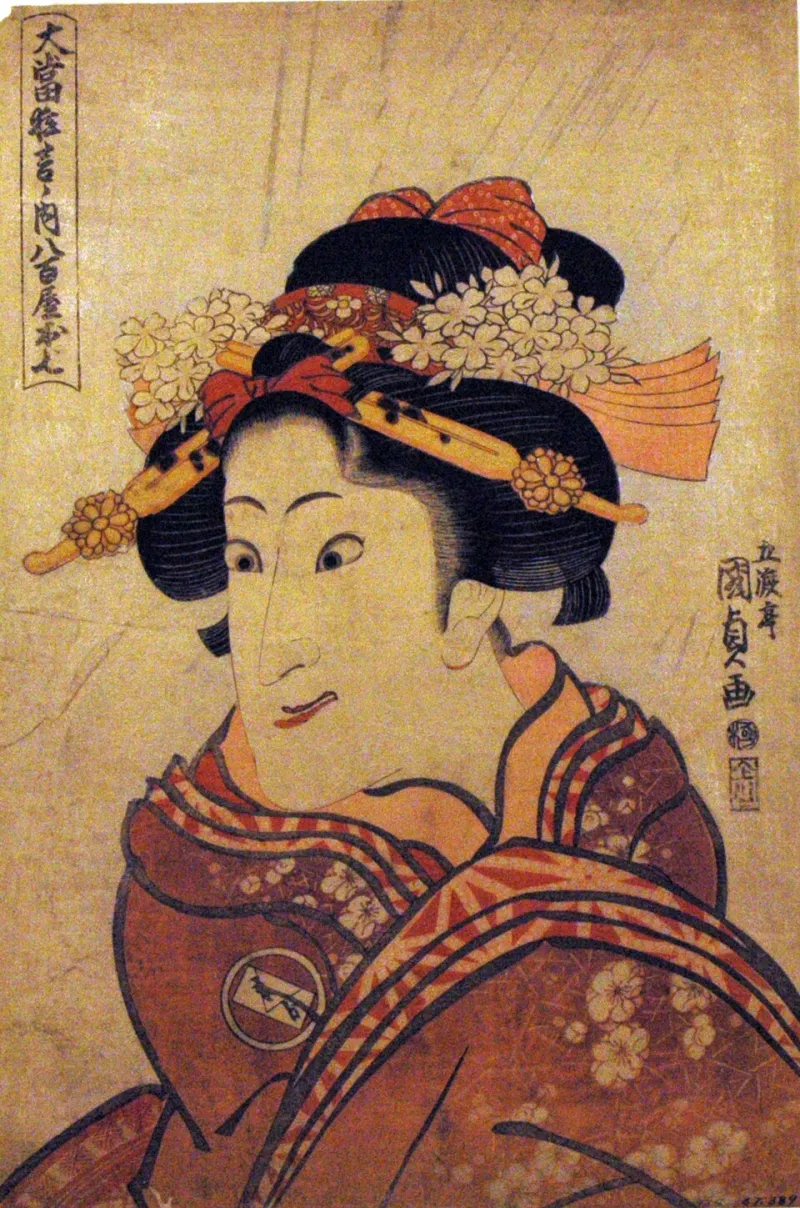
Photo: thesandiegomuseumofartcollection, Public domain, via Wikimedia Commons
American storytelling has a confession problem—or, more precisely, an addiction to confession. From the talk-show circuit to the prestige drama, the culture has developed an almost liturgical faith in full disclosure: the idea that the complete, articulated, spoken truth is the highest form of honesty available to a human being. Characters in American films and television reach their emotional climaxes by saying the thing they have been withholding. The scene builds, the music rises, and the confession arrives like absolution.
Japanese cinema frequently refuses this structure entirely. Its characters approach the moment of revelation and then stop—mid-sentence, mid-thought, mid-breath. The confession never completes. And in that incompletion, something far more honest than full disclosure sometimes emerges.
The Unsaid as the More Accurate Thing
There is a concept in Japanese aesthetics—ma, the productive interval, the meaningful gap—that helps explain why Japanese filmmakers treat the unspoken with such deliberate care. The pause is not empty. It carries what language would flatten or falsify. When a character in a Japanese film falls silent at the edge of confession, the silence is not evasion. It is often the most accurate thing they can offer.
In Kore-eda's After Life (1998), the newly dead are asked to identify a single memory to carry into eternity. The film is structured around a series of interviews, and what strikes the attentive viewer is how often the characters circle their most important memories without ever landing precisely on them. They describe the edges of the feeling rather than the feeling itself. One elderly man speaks at length about his wife without ever saying directly what she meant to him. The incompleteness is the point: the thing that mattered most resists the reduction that articulation would require.
This is a fundamentally different model of emotional honesty than the one American audiences are trained to expect. Where American storytelling treats the explicit statement as the destination, Japanese cinema frequently treats it as a form of violence against the feeling being described.
Withholding as Self-Knowledge
In Ryusuke Hamaguchi's Wheel of Fortune and Fantasy (2021), the three-part anthology structure allows Hamaguchi to examine the incomplete confession from multiple angles. In the film's second segment, a student attempts to seduce a professor by reading aloud an erotic passage and then transitioning into conversation about his personal life. The seduction fails—not because the student is insincere, but because the professor refuses to be drawn into the explicit acknowledgment the student is angling toward. The professor understands what is being asked of him and declines to provide it, not out of coldness but out of a kind of wisdom about what full disclosure would cost both of them.
American viewers often read this kind of withholding as repression—the psychological failure to access one's own feelings. But Hamaguchi's framing suggests something more considered: the character who withholds the confession is not unaware of what they feel. They are aware enough to know that saying it fully would change it, diminish it, or weaponize it. The incomplete confession is a form of self-knowledge, not its absence.
The Therapy-Culture Collision
It is worth acknowledging directly why this narrative strategy produces such friction for American audiences. The United States has developed, over the past several decades, a cultural infrastructure built around the value of verbal self-disclosure. Therapy culture—now thoroughly mainstream—teaches that the unexpressed feeling is the dangerous one, that articulation is healing, and that the reluctance to confess is a symptom of damage rather than a form of wisdom.
Japanese cinema does not share these assumptions. It tends to treat the interior life as something that cannot be fully translated into language without losing something essential in the process. Characters who withhold are not necessarily traumatized or avoidant. They may simply understand that some things are truer when they remain unspoken—that the half-offered confession, the sentence that stops before its destination, is sometimes the only honest version of the thing.
This cultural collision is precisely what makes Japanese cinema so valuable for American viewers willing to engage with it. It does not validate the confession-culture model. It offers a counter-proposal: that restraint can be a form of respect—for the listener, for the feeling itself, and for the complexity that full disclosure would inevitably simplify.
What the Incompletion Teaches the Viewer
When a Japanese film character stops before the confession, the viewer is placed in an active interpretive role. The film has not told them what to conclude. They must read the silence, the physical posture, the quality of the pause, the context of everything that has come before. This is not withholding as manipulation—it is withholding as invitation.
In Ozu's Late Spring (1949), the relationship between a father and daughter contains volumes of unexpressed feeling about loss, duty, and love. Neither character ever delivers the speech that would make their inner lives legible in the way American drama would demand. And yet the film is emotionally devastating precisely because of this restraint. The viewer assembles the confession from its fragments, which means the emotional conclusion arrived at is genuinely the viewer's own.
That is a remarkable thing for a film to accomplish—and it requires the incomplete confession as its primary instrument. The half-spoken truth, it turns out, may be the most complete form of honesty that cinema knows how to offer.