No Place to Hide: How Japanese Cinema Uses the Unbroken Shot to Make Watching Feel Like Witnessing
There is a particular discomfort that arises when a camera simply refuses to stop looking. No cutaway. No reaction shot. No merciful edit to relieve the pressure building in a room. In Japanese cinema, this refusal is not an oversight or an affectation—it is a deliberate philosophical stance toward human experience, one that treats the unbroken shot as the most honest instrument available to a filmmaker.
Where Hollywood editing has long operated on the principle of emotional guidance—telling viewers when to feel, where to look, and when the difficult part is over—Japanese directors have frequently chosen a different path. They hold. They wait. They observe. And in doing so, they implicate the audience in a way that feels less like entertainment and more like testimony.
The Cut as Mercy
To understand what Japanese cinema withholds, it helps to appreciate what the standard Hollywood cut provides. Conventional editing, rooted in the continuity principles that dominated twentieth-century American filmmaking, is engineered for comfort as much as clarity. A reaction shot gives viewers permission to feel something vicariously rather than directly. A cut to a neutral space allows emotional pressure to dissipate before the next beat arrives. Editing, in this tradition, is fundamentally protective.
Japanese filmmakers have long interrogated that protection. Directors such as Yasujirō Ozu, Hirokazu Kore-eda, and Ryūsuke Hamaguchi have, across different eras and with markedly different sensibilities, returned repeatedly to the extended take as a means of refusing that comfort. Their cameras do not flinch. The effect is not cruelty—it is precision. By removing the cut, they remove the escape route, and what remains is something rawer and more demanding than conventional cinema typically asks of its audience.
Ozu's Pillow Shots and the Weight of Continuation
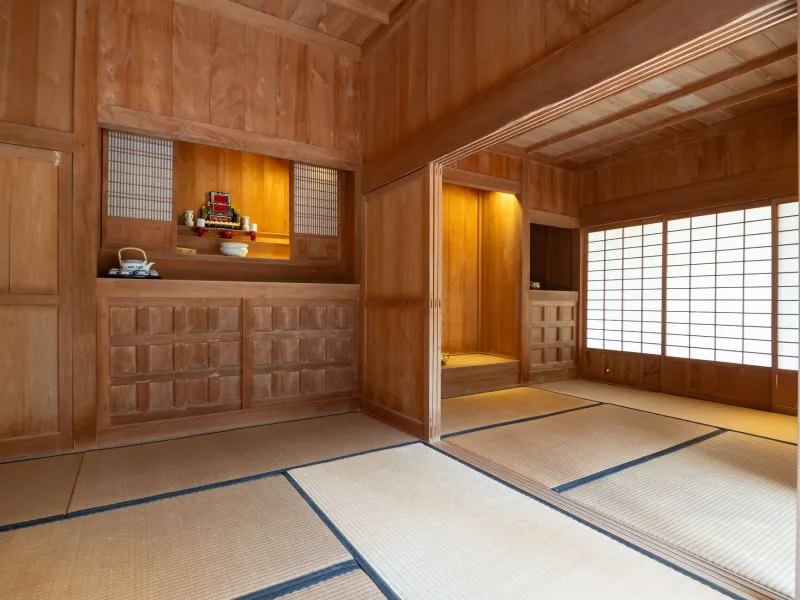
The conversation about sustained observation in Japanese film almost inevitably begins with Ozu, though his technique is frequently misunderstood. His famous pillow shots—those quiet, apparently static images of hallways, teapots, rooftops, laundry lines—are not pauses in the narrative. They are continuations of it. By holding on spaces after human drama has departed them, Ozu refuses to let the emotional charge dissipate. The room where a painful conversation occurred remains on screen, still and patient, as if the air itself has not yet recovered.
This is a form of unbroken observation applied not to performance but to environment, and its effect is quietly devastating. American viewers accustomed to scene transitions that signal emotional closure often find themselves unsettled by Ozu's refusal to provide one. The pillow shot says: this happened, and we are not yet done with it.
Kore-eda and the Documentary of Feeling
Hirokazu Kore-eda, whose work has reached American audiences through films such as Shoplifters and Nobody Knows, extends this tradition into a more overtly naturalistic register. His extended takes frequently capture actors in states that feel less performed than inhabited—moments of grief, confusion, or quiet joy that unspool at their own pace rather than the pace the script might demand.
In Nobody Knows (2004), the camera's sustained attention to the four children left to survive alone in a Tokyo apartment gradually transforms from observation into something approaching moral weight. Kore-eda does not cut away from the slow deterioration of their circumstances. He holds on small, ordinary moments—a child washing dishes, another sleeping on the floor—until the accumulation of these unedited instants becomes unbearable. The viewer cannot look elsewhere. There is no elsewhere provided.
This is the psychological mechanism at the heart of the technique: when editing removes the option of redirection, attention deepens into something involuntary. Watching becomes witnessing, and witnessing carries a different emotional and ethical charge than passive viewing.
Hamaguchi's Conversational Endurance
Ryūsuke Hamaguchi has brought this tradition into explicit conversation with contemporary global cinema. His films—particularly Asako I & II, Wheel of Fortune and Fantasy, and the Academy Award–winning Drive My Car—are built around extended scenes of dialogue in which the camera holds on speakers and listeners alike, refusing to prioritize one over the other through conventional shot-reverse-shot editing.
In Drive My Car, a film already remarkable for its three-hour runtime and its willingness to let silence accumulate, the scenes set inside the protagonist's red Saab are exercises in sustained intimacy. The characters cannot escape each other. Neither can the viewer escape them. Hamaguchi has spoken in interviews about his interest in what happens to actors—and by extension, to audiences—when performance is denied the relief of editing. Something genuine surfaces, he has suggested, when the camera simply waits long enough.
For American viewers, these sequences can initially produce impatience. The instinct to anticipate the cut, cultivated by decades of faster editing rhythms, creates a low-grade anxiety when the cut does not arrive. That anxiety, it turns out, is part of the meaning. The discomfort is not incidental. It is the film working.
Invasive Truth and the Ethics of the Gaze
There is a tension worth naming here. The unbroken shot, for all its emotional power, is not without ethical complexity. To hold a camera on a person in distress—whether a fictional character or, in documentary contexts, an actual human being—raises questions about the nature of the gaze itself. Japanese cinema has not always resolved these questions cleanly, and nor should it be expected to. What it has done is make them visible.
The discomfort American viewers sometimes report when watching extended Japanese takes is not simply a matter of unfamiliar pacing. It is the discomfort of being denied the cultural permission to look away. Hollywood editing grants that permission constantly. Japanese cinema, at its most rigorous, declines to do so. The camera, in this mode, does not protect the viewer's feelings. It trusts them, instead, to bear what is there.
Why This Matters for American Audiences
The United States has its own tradition of long-take filmmaking—from the work of John Cassavetes to more recent examples in independent cinema—but it has never become dominant in the way it has in certain strands of Japanese film culture. American studio cinema, in particular, has grown increasingly reliant on rapid cutting, a tendency that has only accelerated in the streaming era.
Against this backdrop, the Japanese unbroken take offers something genuinely countercultural: a cinema that believes human experience is not improved by being edited. That grief does not need to be managed. That awkwardness, when held long enough, becomes truth. For viewers willing to meet these films on their own terms, the reward is a form of emotional contact that faster cinema rarely achieves—an intimacy that feels, at its most effective, less like watching a film and more like sharing a room with someone who has nothing left to hide.
The camera, in these moments, does not blink. Neither, eventually, can we.