Cinema as Conversation: How Japanese Film Rewires the Way We Watch
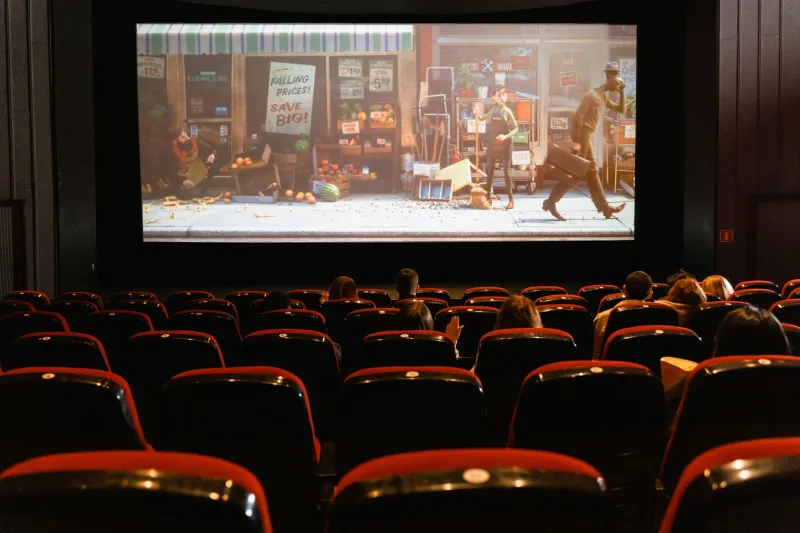
There is a peculiar discomfort that settles over many American viewers during their first encounter with a film by Hirokazu Kore-eda or Ryusuke Hamaguchi. Nothing is wrong, precisely. The images are beautiful. The performances feel genuine. And yet something expected is absent — the guiding hand, the clarifying line of dialogue, the musical swell that tells you how to feel. The film simply proceeds, trusting that you will keep up, or better yet, that you will lean in.
That discomfort, once examined, is remarkably instructive. It reveals just how thoroughly mainstream American cinema has conditioned its audiences to receive stories rather than participate in them.
The Architecture of Explanation
Hollywood storytelling, at its commercial core, is built around a principle of legibility. Motivations are stated. Emotions are underscored. Transitions are announced. This is not an accident or a failure of imagination — it is a deliberate design philosophy, shaped by decades of market research, test screenings, and a distribution model that demands universal accessibility across demographic lines. The result is a cinema that leaves very little to chance, and even less to the viewer.
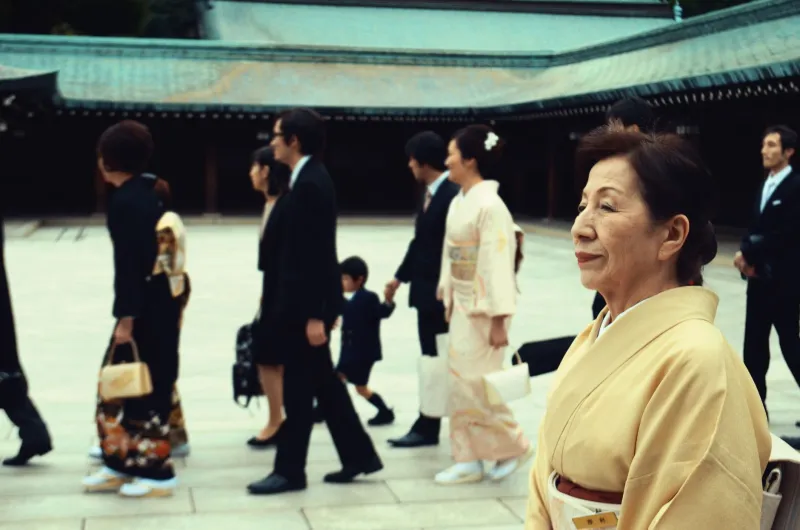
Japanese cinema, particularly in its more artistically ambitious registers, operates from an almost opposing set of assumptions. Silence is not dead air — it is information. A glance that lingers a half-second too long carries the weight of a monologue. A character's failure to respond to a question tells us more than any answer could. The tradition draws from deeply embedded cultural values around indirectness, around ma — the productive interval between sounds, gestures, or words — and around the social intelligence required to read what is not explicitly offered.
For Japanese audiences, this is not minimalism for its own sake. It is a reflection of how meaning actually circulates in daily life: obliquely, through inference, through the careful reading of context. To watch a Kore-eda film is, in some respects, to practice a skill that Japanese social life already demands.
What Gets Lost in the Handholding
Consider the difference between being told that a character is grieving and being shown a kitchen where a single unwashed cup sits on the counter, untouched for what the light suggests has been many days. The first approach delivers information. The second creates an experience. The viewer who notices that cup, who reads its implications, becomes a collaborator in the story's meaning rather than a recipient of it.
This distinction matters enormously. When a narrative explains itself fully, it forecloses interpretation. The viewer's role is reduced to verification — checking whether the film delivers on what it has promised. When a narrative withholds, it opens a space that the viewer must fill with their own emotional intelligence, their own memories of loss or longing or estrangement. The film becomes personal in a way that explained stories rarely achieve.
American cinema has grown so accustomed to filling that space preemptively that many viewers no longer know it exists. Japanese film reminds us of its presence — and of what we are capable of when given the opportunity to use it.
Learning to Listen
The analogy to listening is not incidental. In a culture saturated with content designed to capture and hold attention through escalating stimulus, the act of genuine listening has become genuinely difficult. We are trained, across platforms and formats, to receive information in compressed, pre-digested form. The summary, the recap, the explainer video — all of these are symptoms of a media environment that has lost confidence in the audience's patience.
Japanese cinema, at its best, refuses that bargain. A film like Drive My Car — Hamaguchi's 2021 adaptation of Haruki Murakami's short story, which earned Japan its first Academy Award for Best International Feature Film in that category — spends its first forty minutes in what amounts to an extended prologue before its title card appears. Western critics, trained to evaluate narrative efficiency, initially puzzled over this choice. But those forty minutes are not preamble. They are instruction. They are teaching the viewer how to watch what follows: slowly, attentively, with an ear for what characters mean rather than what they say.
The experience of watching such a film is, in the most literal sense, an exercise in listening — to pauses, to contradictions between word and expression, to the emotional undertow running beneath ordinary conversation. It is demanding in the way that any genuine conversation is demanding. And it is rewarding in proportion to that demand.
The Urgency of Restraint
There is a broader cultural argument to be made here, one that extends well beyond cinema. In an era defined by information overload, by the relentless acceleration of content cycles, by the ambient anxiety of never being fully caught up, the experience of sitting with ambiguity — of resisting the urge to resolve, to summarize, to move on — carries a kind of therapeutic weight.
Japanese film offers American audiences a structured practice in that resistance. It creates conditions under which patience is not merely tolerated but required, under which the willingness to remain uncertain is revealed as a form of intelligence rather than a failure of comprehension. The viewer who finishes Still Walking or Shoplifters without being able to produce a tidy thematic summary has not missed the point. They have, in all likelihood, encountered it more directly than any synopsis could deliver.
Restraint, in this context, is not deprivation. It is a form of respect — for the complexity of human experience, for the viewer's capacity to meet that complexity, and for the kind of meaning that only emerges when it is not forced.
An Invitation, Not a Test
It would be a mistake to frame Japanese cinematic restraint as an obstacle to be overcome, a cultural barrier that demands special preparation or academic credentials. The invitation these films extend is not an exclusive one. It is, rather, an unusually honest one.
Most commercial cinema asks you to sit back. Japanese film, at its most characteristic, asks you to sit forward — to bring your attention, your emotional history, your willingness to hold a question without immediately resolving it. What it offers in return is a form of engagement that feels, by contrast with the over-explained alternative, startlingly alive.
American viewers who accept that invitation frequently report something close to disorientation upon returning to mainstream fare — a sudden awareness of how much is being done for them, how little they are being asked to contribute. That disorientation is not a complaint. It is the sign of a newly calibrated ear, one that has learned to listen for what a story is not saying, and to find there, in the silence, the most essential things.