The Productive Void: How Japanese Cinema Turns Scarcity Into Its Most Powerful Storytelling Tool
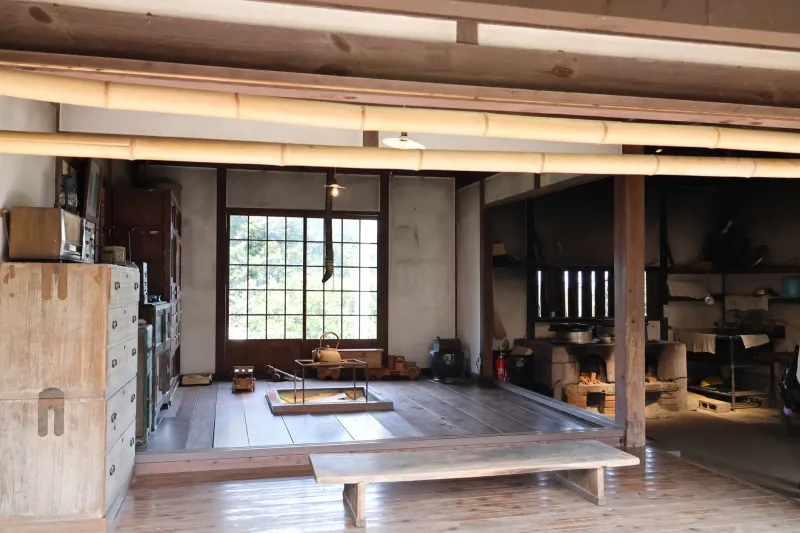
There is a concept in Japanese aesthetics called ma—a word that translates imperfectly as "negative space" or "pause," but that carries a richer charge than either English equivalent suggests. Ma is not the absence of something. It is a presence in its own right: the silence between notes that gives music its shape, the empty room that makes the occupied one meaningful. Japanese cinema, particularly at the independent and mid-budget level, has built an entire production philosophy around this idea. Less is not a compromise. Less is a decision.
For American filmmakers and audiences conditioned by an industry that equates scale with significance, this philosophy can be genuinely difficult to absorb. The instinct, when resources are limited, is to treat limitation as a problem to be solved—to find workarounds, to simulate scale, to apologize through production design for what the budget cannot provide. Japanese cinema, by contrast, tends to treat limitation as an invitation. The question is not how to disguise the constraint. It is how to make the constraint do the work.
Case Study: The Single Location as Moral Universe
Kore-eda Hirokazu's Still Walking (2008) is, in production terms, a remarkably modest film. It unfolds almost entirely within a single family home over the course of a single day. There are no location changes of dramatic consequence, no elaborate set pieces, no visual effects of any kind. The budget was small. The crew was lean.
And yet the film contains multitudes. Because the house is the only world the film inhabits, every element within it accumulates meaning at a rate that a more expansive production could not achieve. The narrow hallway where a father and son fail to make eye contact becomes a geography of estrangement. The kitchen, where the mother works continuously and almost compulsively, becomes a monument to labor that no one fully acknowledges. The garden, glimpsed through sliding doors, becomes a threshold between the life the family has and the life it has lost.
Constraint, here, is not a limitation on the story. It is the story's mechanism. The house does not merely contain the drama. It is the drama, made legible through the discipline of staying inside it.
The Skeletal Crew Aesthetic
Ryusuke Hamaguchi's early work, particularly the films he made while still developing his signature style, offers another instructive model. Productions like Passion (2008) and Intimacies (2012) were made with minimal resources, often with non-professional actors and stripped-down technical support. What they lack in production polish they more than compensate for in tonal precision—a quality that emerges directly from the conditions of their making.
With smaller crews, the set becomes quieter. Actors are not managed by layers of assistants; they are present in a more exposed, less mediated way. Hamaguchi's extended rehearsal process—which he has described in interviews as a method for stripping performance down to something closer to genuine behavior—benefits from this environment. The camera, operated with minimal interference, catches something that heavier productions often lose: the texture of actual human uncertainty.
This is not an argument against professionalism or technical sophistication. It is an observation that the conditions of production shape the conditions of performance, and that simplicity in one domain can generate complexity in another.
What the Set Design Does Not Say
In Naomi Kawase's Still the Water (2014), production design serves a function that is almost anti-decorative. The film's environments—coastal Amami Ōshima, traditional homes, natural landscapes—are rendered without embellishment. There are no establishing shots designed to impress, no cinematographic flourishes intended to signal that this is a Beautiful Film About Nature. The visual approach is direct, even austere.
The effect is to place the emotional content entirely in the foreground. Because the film's visual language declines to perform beauty, the beauty that does appear—a specific quality of light, the motion of water, a face in genuine grief—arrives with unusual force. The restraint of the surrounding context makes the significant moment legible as significant, rather than merely as one more element in an already saturated visual field.
American productions, particularly in the prestige drama space, often make the opposite choice: every frame is composed for maximum pictorial impact, every scene underscored to ensure the emotional register is unmistakable. The result, paradoxically, can be a kind of numbness—a surfeit of signal that paradoxically makes it harder to feel anything.
What American Cinema Might Actually Learn
The lesson here is not that American filmmakers should simply spend less money. Budget is a tool, and tools should be matched to the task. The lesson is more fundamental: that the relationship between production scale and emotional impact is not linear, and that treating constraint as a creative parameter rather than a problem to be overcome can unlock storytelling possibilities that abundance forecloses.
Some American independent filmmakers have understood this intuitively—Kelly Reichardt's spare, attentive work comes to mind, as does the early career of Sofia Coppola. But the dominant culture of American production, even at the independent level, tends to treat limitation as something to be ashamed of rather than something to be leveraged.
Japanese cinema, at its best, demonstrates that the empty frame is not an unfilled frame. It is a frame that has chosen, with precision and intention, exactly what it needs to hold.